“You don’t rise to your goals. You fall to the level of your systems.”
What You Will Learn
- How pressure and expectation shape leadership in elite sport
- Why systems, not motivation, determine consistency under stress
- The parallels between sport, business, and human performance
Introduction
Every coach, therapist, and performance professional knows the feeling—your athletes are tired, the schedule is relentless, and the pressure to win never fades. In those moments, performance isn’t about talent or training. It’s about stability under stress.
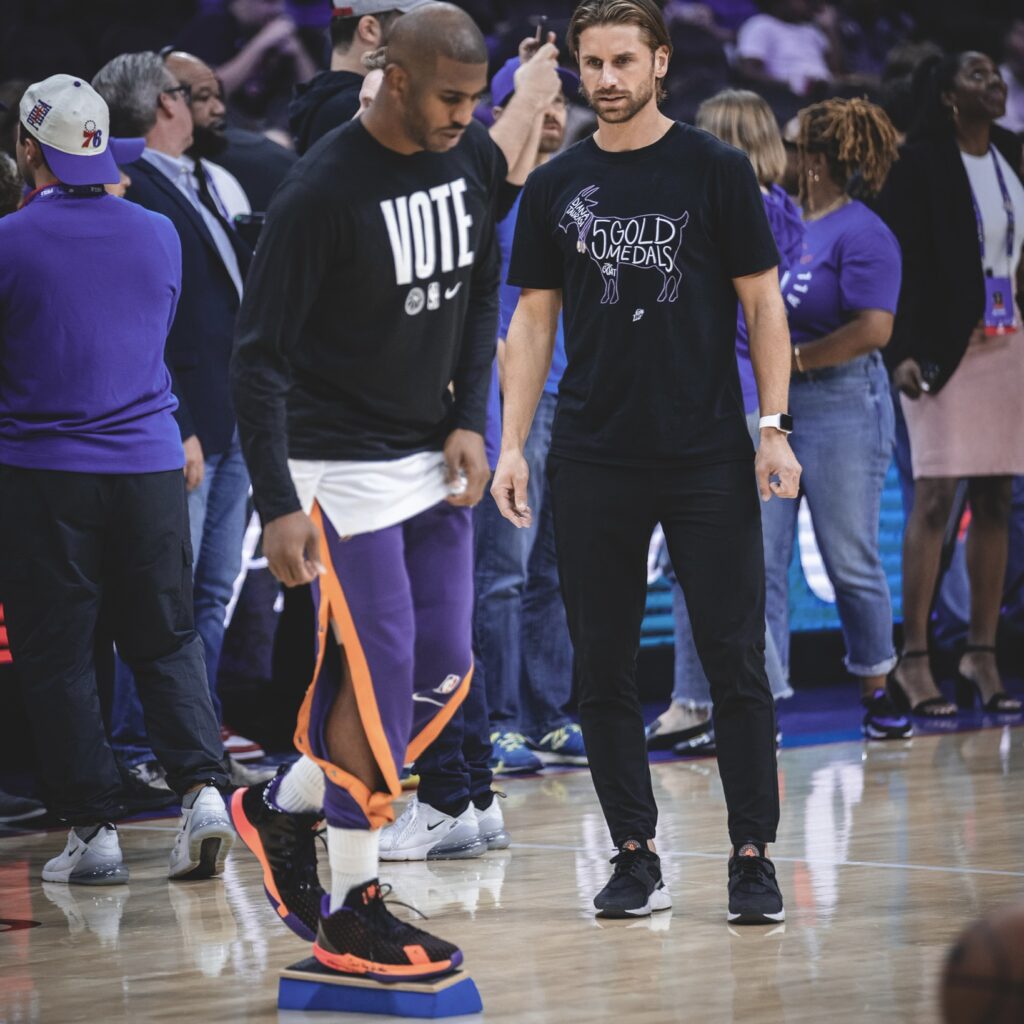
In this episode of Finding Small Wins, I sat down with Steve Tashjian, former High-Performance Director for Everton FC in the Premier League and the U.S. Men’s National Soccer Team at the 2022 FIFA World Cup. Steve’s perspective on leading under pressure stems from more than twenty years of experience balancing performance, emotion, and expectation across some of the world’s most intense sporting environments.
What fascinated me most about this conversation wasn’t just the tactical side of leadership. It was the human side and how Steve learned to lead through uncertainty, to align people and systems when the noise was loudest. From the locker room to the boardroom, his story illustrates that pressure doesn’t destroy leaders rather it reveals them.
This conversation lives at the intersection of performance science and human behavior, bridging lessons that apply to coaches, clinicians, and executives alike.
Guest Background: Steve Tashjian
Steve’s journey began not in the boardroom, but in the clinic. Trained as a physical therapist, he built his foundation in biomechanics and sports medicine before transitioning into performance management. That blend of medical precision and human understanding became his leadership superpower.
Across two decades, Steve has led performance programs in Major League Soccer (Columbus Crew), the Premier League (Everton FC), and the U.S. Men’s National Team. His leadership reached its peak on the global stage in Qatar at the 2022 World Cup, where he coordinated a multidisciplinary team under the highest possible pressure.
Today, through his company The Elevation Project, Steve consults for elite sports organizations, global brands like Stanley and Lego, and even performing arts companies by teaching them how to build high-performance environments rooted in clarity, communication, and consistency.
When Steve speaks about leadership, he’s not talking theory. He’s lived it in locker rooms facing relegation, in World Cup training camps, and in boardrooms helping companies redefine their culture.
Pressure Is the Collision Between Reality and Expectation
“Pressure is when reality and expectation collide and they’re not aligned.”
In sport, pressure is constant, but it isn’t random. It emerges when what we expect doesn’t match what is. A coach might expect to win every week, while the reality of fatigue, injuries, and competition tells a different story. That gap if the friction between optimism and circumstance and is where leadership is tested.
Steve describes pressure as something you must engineer, not avoid. In his words, “The right pressure keeps people sharp. The wrong pressure breaks them.” He believes great leaders calibrate pressure like volume dialing it up to stretch potential but never so loud that it drowns out clarity.
From his time at Everton, where the team faced the threat of relegation, Steve learned that unmanaged pressure breeds chaos. Systems and communication are what turn chaos into control. When the environment becomes unpredictable, predictability in process becomes the anchor.
For coaches and clinicians alike, this is a lesson in self-awareness: pressure is not purely external. It’s the mismatch between what we promise, what we can deliver, and what we communicate along the way. Alignment dissolves pressure before it ever becomes stress.
Systems Are the Safety Net for Chaos
“You don’t rise to your goals. You fall to the level of your systems.”
In elite environments, everyone has goals like win the match, make the playoffs, qualify for the World Cup. But when pressure spikes, the brain reverts to habit. The only thing that holds is the system beneath the stress.
Steve’s evolution as a leader mirrors this truth. Early in his career, as a practitioner in MLS, systems were minimal. Teams operated more on intuition than integration. By the time he reached the Premier League, measurement and data ruled every decision. But more data didn’t necessarily mean better decisions.
The key, he found, was building systems that support human judgment, not replace it.
Whether in sport or business, systems are scaffolding for consistency. They define roles, anchor decision-making, and create rhythm in environments that constantly shift.
When he later led the U.S. National Team, Steve learned to rely on those systems across time zones and continents. He no longer led a single room of athletes rather he led a network of performance professionals worldwide. Process became the unifier.
For anyone in high-performance work like rehab, coaching, or leadership, this principle is gold. Systems don’t limit freedom; they enable it. They are the baseline that allows creativity to thrive when pressure peaks.
Leading Through Empathy and Connection
“Leadership is about people, not performance metrics.”
Despite the metrics, GPS data, and performance analytics, leadership remains deeply human. Steve puts it simply: “I’m not in the business of fitness anymore. I’m in the business of people.”
Whether managing Premier League athletes or corporate executives, the constant is emotion. Leaders must read the room by knowing when to push, when to pause, and when to listen.
Steve and I discussed the skill of compartmentalization, something he learned working alongside coaches like Gregg Berhalter. The best leaders, he says, can package emotion by recognizing pressure without letting it paralyze action. They know when to put the stress aside and when to unpack it later.
This kind of composure isn’t about suppressing emotion; it’s about directing it.
For physical therapists and performance coaches, it’s the same during rehab or training. empathy builds trust, and trust drives adherence. No spreadsheet replaces a human connection.
The Relentless Execution of Elite Processes
“High performance is the relentless execution of elite systems and processes.”
Steve’s definition of high performance cuts through jargon. It’s not a motivational slogan. It’s a discipline. Relentless execution means doing the small things at a high standard, repeatedly, especially when no one’s watching.
He explains that high performance isn’t about chasing perfection. It’s about establishing non-negotiables that protect quality under fatigue and stress. In soccer, that may mean consistent recovery protocols. In business, it’s how meetings are structured or feedback is delivered.
For practitioners, this mindset aligns perfectly with long-term athlete development. A good rehab program doesn’t win on one big intervention—it wins on repeated execution of the basics, day after day. Relentlessness, not intensity, separates the best from the rest.
In every environment Steve consults whether sport, business, or the performing arts he uses this same framework: define the process, align the team, execute relentlessly. The art is keeping standards high without burning people out.
Vision, Process, and Values: The Architecture of Culture
“Great teams aren’t great because they win. They’re great because they know why they win.”
Culture isn’t words on a wall. It’s the invisible architecture that guides behavior when no one is watching. Steve builds culture around three anchors: vision, process, and values.
- Vision is the horizon, the purpose that pulls everyone forward.
- Process is the daily rhythm, the operational engine that converts ideas into outcomes.
- Values are the bumpers, the behaviors that keep the organization aligned when things drift.
He shares examples from organizations like Lego and Patagonia, where the vision statements have nothing to do with the product itself. Lego’s is to “inspire and develop the builders of tomorrow.” Patagonia’s is to “save the planet.” Both point toward impact, not inventory.
The message for high-performance environments is clear: vision must live beyond the scoreline. Teams and companies that only chase wins lose their identity when they lose the game. Culture sustains performance long after the scoreboard fades.
Accountability Without Fear: Redefining Leadership
“Accountability isn’t blame. It’s clarity plus empathy.”
One of the most practical insights from this conversation was Steve’s distinction between accountability and autonomy. Many leaders, he explains, confuse freedom with lack of oversight. Without governance, systems slide toward disorder. Without empathy, accountability becomes fear.
His solution? Clear expectations, constant feedback, and emotional intelligence.
He teaches leaders to govern with people, not over them and to define standards, not dictate behavior.
In performance settings, that balance is crucial. Athletes thrive when they know the boundaries but feel trusted within them. The same applies to staff. The leader’s job is to maintain structure while cultivating independence.
Accountability, in Steve’s framework, is not punitive rather it’s connective. It reminds people what “good” looks like and gives them the tools to reach it.
From the Locker Room to the Boardroom
What makes Steve’s perspective unique is his ability to translate lessons from elite sport into corporate and creative settings. Through The Elevation Project, he now advises executives, creative directors, and leadership teams worldwide.
His philosophy of leading under pressure has resonated with global brands like Stanley and Lego – helping them reframe leadership as a relational process. The same principles that drive team performance like alignment, trust, rhythm, and feedback apply equally in business.
Pressure doesn’t belong to athletes alone. A quarterly sales target, a World Cup quarterfinal, or a product launch all demand the same thing: clarity of process under stress.
When structure and purpose align, pressure becomes a catalyst rather than a collapse.
Developing the Next Generation of Leaders
“We promote practitioners into leadership based on technical skill, not leadership readiness.”
Perhaps the most exciting initiative Steve discussed is Athēlos Performance Leaders, a fellowship program designed to close the gap between technical mastery and leadership competence in sport and human performance.
The goal is to support coaches, therapists, and practitioners who suddenly find themselves managing people rather than programs. Athēlos will teach the soft skills that drive hard outcomes: communication, emotional intelligence, governance, and accountability.
This is a critical shift in our industry. We train professionals to treat, to coach, to test but rarely to lead. Steve’s mission is to change that by redefining what leadership development looks like inside high-performance sport.
For practitioners navigating that transition from clinician to leader this episode offers a roadmap built on both experience and empathy.
Conclusion: Finding Stability in the Storm
Pressure is inevitable. The difference between chaos and control lies in how we prepare for it.
Steve Tashjian’s career proves that leading under pressure is not about resisting stress. It’s about engineering systems, aligning people, and defining processes that hold when emotion surges. Whether it’s a Premier League match, a World Cup campaign, or a corporate rebrand, the equation remains the same:
Vision creates direction. Systems create stability. People create performance.
Five Small Wins from This Episode
- Pressure is alignment, not anxiety – clarify expectations early to reduce unnecessary stress.
- Systems sustain performance – fall back on process, not motivation, when chaos hits.
- Empathy is a leadership skill – performance improves when people feel understood.
- Accountability needs governance – structure enables autonomy, not the other way around.
- Culture beats strategy – clear vision and values outlast any short-term plan.
Listen to the Full Episode Here

Episode Timeline
- 00:00 – Opening reflections on shared backgrounds in sport
- 03:00 – Lessons from MLS, Premier League, and the U.S. National Team
- 07:30 – Defining pressure as reality versus expectation
- 11:00 – The systems that stabilize chaos
- 17:30 – Communication and leadership under stress
- 23:00 – Accountability versus autonomy
- 31:00 – Vision, process, and values framework
- 40:00 – Human leadership and emotional intelligence
- 50:00 – From soccer to business: translating performance principles
- 1:05:00 – The future of leadership education through Athēlos
Read More Like This