

Approximate Read Time: 14 Minutes
A 2026 systematic review examined injury risk across the menstrual cycle. The findings reveal more about our research methods than female athlete biology.
What You Will Learn
- Current research cannot confirm whether muscle injury risk varies across the menstrual cycle
- Evidence quality, not absence of biological effect, explains why recommendations remain impossible
- Better research methods are needed before programming decisions can be evidence-based
When Biology Meets Bad Measurement
If you’ve ever worked in women’s sports or with the female athlete, you’ve probably touched on the menstrual cycle at some point. Female athletes typically are open to discuss their cycles because they may feel an impact on their performance.
Performance coaches, myself included, have previously claimed to program around hormonal fluctuations. There is certainly no short of this perspective across social media and “train with your cycle” content.
But recently I returned to working with professional women soccer players. I decided I needed to revisit the literature on this. The truth is that a January 2026 systematic review made it very clear: we still don’t know if muscle injury risk actually changes across the menstrual cycle (Guthardt, 2026).
Not because the biology doesn’t matter. The biology almost certainly does matter. Estrogen and progesterone affect tissue properties, muscle stiffness, neuromuscular control, and collagen metabolism. The mechanisms are real.
The problem is measurement. And until we fix how we study this question, programming decisions remain educated guesses rather than evidence-based practices.
This article is about what we know, what we don’t know, and why the gap between those two things should change how we talk about menstrual cycle research in female athletes.
What the 2026 Systematic Review Actually Found
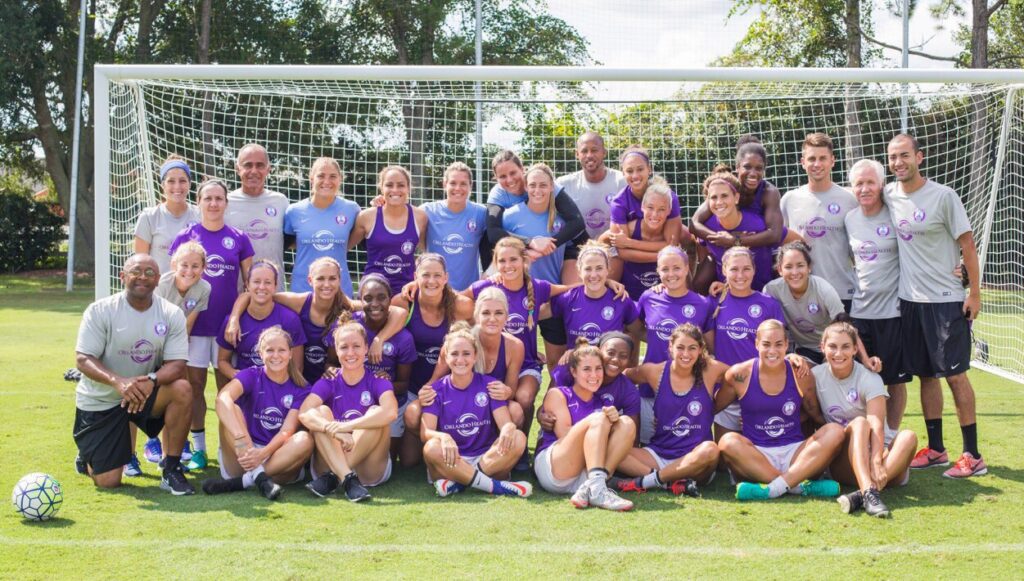
In January 2026, researchers published a systematic review and meta-analysis examining the relationship between menstrual cycle phases and muscle injury occurrence in female team sport athletes (Guthardt, 2026). They found three studies that totaled 318 female athletes across professional soccer and futsal.
The meta-analysis calculated a pooled Risk Ratio of 1.18 (95% CI: 0.75 to 1.86, p = 0.46) comparing injury risk between the luteal and follicular phases. Translation: no statistically significant association.
On the surface, that sounds definitive. Cycle phase doesn’t affect injury risk. Programming decisions can ignore hormonal fluctuations. Case closed.
But that interpretation misses the point entirely.
Why “No Significant Association” Doesn’t Mean What You Think
Here’s what the finding actually means: given the current quality of evidence, we cannot detect a statistically significant difference in injury risk across menstrual phases.
That is not the same as saying no difference exists.
The review’s authors were explicit about this distinction. Using the GRADE system, the gold standard for assessing evidence quality, they rated the certainty of cumulative evidence as “very low” (Guthardt, 2026).
Very low certainty means the true effect could be substantially different from the estimate. It means we should have very little confidence in the pooled finding. And it means, as the authors concluded, no practical or clinical recommendations can be made at this time.
This distinction matters because media coverage, social posts, and even some clinicians will likely interpret “no significant association” as permission to ignore cycle-related programming. But the review is telling us something different: our measurement tools are not good enough to answer this question yet.
3 Critical Problems With Current Research
The 2026 review identified three fundamental limitations that undermine confidence in existing findings. Each one individually would raise concerns. Together, they make current evidence challenging to interpret.
Problem 1: Self-Reported Cycle Tracking Without Validation
All three studies relied on self-reported menstrual cycle data. None used blood hormone testing. None used urinary ovulation detection kits. Athletes tracked their cycles through mobile apps, calendar counting, or self-reported cycle length.
This is not a minor methodological concern. It is a foundational flaw.
Cycle length varies between and within individuals. Stress, training load, illness, and body composition changes all affect cycle regularity. These factors impact competitive athletes (Guthardt, 2026).
Without hormonal verification, studies cannot confirm what phase an athlete was actually in when an injury occurred. An injury classified as “luteal phase” in one athlete might be “late follicular” in another based solely on counting errors or inaccurate labelling of a cycle.
Self-reported data may work for convenience, but it does not work for scientific accuracy. And when the research question is whether subtle hormonal fluctuations affect injury risk, precision is not optional.
Problem 2: Inconsistent Phase Classifications Across Studies

Even if cycle tracking were accurate, the three studies did not agree on how to divide the menstrual cycle.
One study used four phases: menstruation, remainder of follicular, luteal, and premenstrual window (Barlow, 2024). Another used three phases: follicular, late follicular, and luteal (Martin, 2021). A third used three different phases: follicular, ovulatory, and luteal (Lago-Fuentes, 2021).
This inconsistency creates a challenge. An injury occurring on day 13 of a 28-day cycle might be classified as “late follicular” in one study, “ovulatory” in another, and “early luteal” in a third. When researchers pooled data for meta-analysis, they forced these incompatible classifications into a simplified two-phase system (follicular versus luteal) to allow comparison.
That alignment introduced further imprecision. Hormonal profiles are not binary. Estrogen peaks during the late follicular phase. Progesterone dominates the mid-luteal phase. Collapsing those distinct hormonal environments into broad categories likely obscures real effects (Guthardt, 2026).
Problem 3: Small Sample Sizes and Observational Designs
Three studies. 318 participants. Observational designs where individual athletes contributed multiple data points across phases. Small sample sizes do not just reduce statistical power. They increase the influence of outliers, confounders, and study-specific factors that have nothing to do with the research question.
Why Biological Plausibility Still Matters
Here’s where the conversation gets more nuanced. Just because current evidence is low quality does not mean hormones are irrelevant.
Estrogen and progesterone receptors exist in muscle tissue. Hormonal fluctuations across the cycle affect:
- Soft tissue compliance (Ham, 2020; Sung, 2018)
- Muscle stiffness measured via elastography (Ham, 2020)
- Neuromuscular performance and fatigability (Weidauer, 2020; Graja, 2022)
- Collagen metabolism and synthesis rates (Shultz, 2012; Iwańska, 2021)
- Proprioception under high athletic demands (Frizziero, 2023)
These are not speculative mechanisms. They are documented physiological changes.
The question is not whether hormones affect tissue. The question is whether those tissue-level changes translate into measurable differences in injury risk during sport. And if they do, whether the magnitude of that difference is large enough to justify programming modifications.
This current research cannot answer those questions. But dismissing the biology because the research is flawed would be equally premature.
The Perception-Evidence Gap
One of the most compelling findings in recent surveys is this: over 50% of female athletes report feeling more vulnerable to injury during certain phases of their menstrual cycle (Hayward, 2024).
That perception matters. It shapes how athletes move, how they train, and how they recover. Psychological readiness is not a “soft” variable. Fear and hesitation alter motor patterns in ways that increase joint loading and reduce performance.
But perception does not equal evidence. Athletes may feel more vulnerable due to fatigue, mood changes, or training load rather than direct hormonal effects on tissue. Alternatively, they may be detecting something real that current research is too imprecise to measure.
The gap between lived experience and research findings does not invalidate either. It highlights the need for better methods.
What Future Research Could Look Like
The 2026 review makes explicit recommendations for future studies. These are not suggestions. They are prerequisites for answering the question properly (Guthardt, 2026).
Requirement 1: Hormonal Verification
Future studies can use blood samples or urinary ovulation detection kits to verify menstrual phases. Calendar counting is insufficient. Mobile app tracking is insufficient. Self-reported cycle length is insufficient.
Hormonal verification confirms ovulation and ensures injuries are correctly classified by actual hormonal environment rather than temporal estimates.
Requirement 2: Standardized Phase Definitions
Researchers need to agree on a classification system. The review authors recommend the system used by McNulty (2020), which divides the cycle into six phases based on distinct hormonal profiles:
- Early follicular (low estrogen, low progesterone)
- Late follicular (high estrogen, low progesterone)
- Ovulation
- Early luteal
- Mid-luteal (high estrogen, high progesterone)
- Late luteal
This system captures the three most hormonally distinct windows of early follicular, late follicular, and mid-luteal while allowing for more granular analysis than binary follicular-luteal comparisons (Guthardt, 2026).
Requirement 3: Larger, Well-Controlled Cohorts
Future studies need larger sample sizes, longer follow-up periods, and better control of confounding variables such as:
- Previous injury history (the strongest predictor of future injury)
- Training load and exposure time
- Fatigue and recovery status
- Psychological stress
Without these controls, even well-measured hormonal data cannot isolate cycle-specific effects.
Requirement 4: Specific Injury Types and Severity
Current research pools all muscle injuries together. But a Grade I hamstring strain and a complete muscle rupture have different mechanisms, risk factors, and recovery profiles. If hormonal effects exist, they may be mechanism-specific or severity-dependent.
Future research should differentiate injury types and examine whether hormonal fluctuations affect strains differently than tears, or proximal injuries differently than distal.
The Uncomfortable Reality About Current Programming Advice
This brings us to the practical question: what should coaches, clinicians, and athletes do right now?
The honest answer is coaches should individualize, track, and remain skeptical of generalized recommendations.
Here’s why broad programming advice based on menstrual phase is premature:
- The evidence does not support it. As we’ve established, current research is too low quality to guide decisions.
- Cycle variability is enormous. Not all women have 28-day cycles. Not all cycles are ovulatory. Hormonal responses to training vary individually.
- Injury risk is multifactorial. Even if hormonal effects exist, they interact with training load, sleep, nutrition, previous injury, and psychological state. Isolating one variable ignores the system.
- Placebo and nocebo effects are real. Telling athletes they are “high risk” during certain phases may create hesitation and movement changes that increase injury risk independent of biology.
That does not mean ignoring the menstrual cycle entirely. It means tracking individual responses rather than imposing population-level assumptions.
What Evidence-Based Practice Actually Looks Like Here
If you work with female athletes, here’s what the current evidence supports:
Track Symptoms, Not Just Phases
Encourage athletes to log:
- Energy levels and fatigue
- Muscle soreness and recovery quality
- Training performance and perceived exertion
- Injury or pain occurrences
Over time, patterns may emerge for individual athletes. Those patterns are more actionable than generalized cycle-based advice.
Adjust Training Load Based on Response, Not Calendar
If an athlete consistently reports poor recovery or increased soreness during a specific phase, adjust load accordingly. But make that adjustment based on observed response, not predicted vulnerability.
Communicate Openly Without Creating Fear
Discussing the menstrual cycle should normalize variability, not pathologize it. Athletes need permission to modify training when needed without feeling they are “at risk” simply because of where they are in their cycle.
Avoid Overconfident Programming Claims
Claims like “avoid plyometrics during the luteal phase” or “peak strength training during the follicular phase” are not supported by evidence. They may sound science-based, but they rest on biological plausibility, not demonstrated outcomes.
Why This Uncertainty Should Not Discourage Research
The 2026 review is not a failure. It is a necessary recalibration.
By explicitly rating evidence quality as “very low,” the authors are doing what good science requires: acknowledging uncertainty rather than overstating weak findings.
This clarity is valuable. It prevents premature implementation of programming strategies that may not work. It redirects research toward better methods. And it protects athletes from well-intentioned but unsupported interventions.
The biology is real. The question is answerable. But answering it properly requires investment in longitudinal studies with hormonal verification, standardized definitions, and rigorous control of confounders.
Until that research exists, the most evidence-based approach is transparency. The research is saying we don’t know yet, and that’s okay.
The Bigger Picture: Female Athlete Research Is Underfunded and Undervalued
It’s worth stepping back and asking why this research is so limited in the first place.
Female athletes represent roughly half of competitive sport participants, yet they remain dramatically underrepresented in sports medicine research (Emmonds, 2019; Costello, 2014). Funding is scarce. Study designs often adapt male-focused protocols rather than addressing female-specific questions. And menstrual cycle research requires longitudinal designs, repeated hormonal sampling, and larger cohorts. All of which are expensive and logistically complex.
The result is a knowledge gap that leaves practitioners, coaches, and athletes navigating uncertainty. Acknowledging that gap is not pessimism. It’s realism. And it’s the first step toward demanding better.
What This Means for Practitioners Working With Female Athletes
If you’re a coach, clinician, or performance professional, the 2026 review offers clear guidance:
- Do not ignore the menstrual cycle. Biology matters, even if current research cannot quantify effects precisely.
- Do not over-program based on cycle phase. Generalized recommendations are not supported by evidence.
- Individualize based on tracked responses. What matters is how the athlete in front of you responds, not what a meta-analysis of 318 athletes suggests.
- Communicate uncertainty honestly. Athletes benefit from transparency. They do not benefit from false confidence in weak evidence.
- Advocate for better research. Support funding, participate in studies, and demand higher methodological standards.
The Path Forward
The 2026 systematic review is not the final word on menstrual cycle and muscle injury risk. It is a starting point.
Future research with hormonal verification, standardized phase definitions, and adequate sample sizes will provide clearer answers. Until then, programming decisions must balance biological plausibility with evidence humility.
The menstrual cycle is not a performance liability. It is a physiological reality. And the athletes who navigate it successfully do so not because they follow rigid protocols, but because they track, adapt, and individualize.
That approach does not require perfect evidence. It requires attention, communication, and a willingness to work within uncertainty.
Want a FREE Cheat Sheet for ACL Return to Play Criteria? check out my 360 Profile!
Watch More Like This
Related Podcasts

References
Guthardt Y, Sargent D, Julian R. The influence of the menstrual cycle on muscle injuries – a systematic review and meta-analysis. Scientific Reports. 2026;16:3035.
Barlow A, et al. Injury Incidence, severity and type across the menstrual cycle in female footballers: A prospective three season cohort study. Med Sci Sports Exerc. 2024.
Martin D, et al. Injury incidence across the menstrual cycle in international footballers. Front Sports Act Living. 2021;3:616999.
Lago-Fuentes C, et al. Follicular phase of menstrual cycle is related to higher tendency to suffer from severe injuries among elite female futsal players. Phys Ther Sport. 2021;52:90-96.
Hayward E, et al. Role of the menstrual cycle on performance and injury risk: A survey of female professional rugby players in the united Kingdom. Int J Environ Res Public Health. 2024;21(2).
Ham S, et al. Greater muscle stiffness during contraction at menstruation as measured by Shear-Wave elastography. Tohoku J Exp Med. 2020;250(4):207-213.
Sung ES, Kim JH. The difference effect of Estrogen on muscle tone of medial and lateral thigh muscle during ovulation. J Exerc Rehabil. 2018;14(3):419-423.
Weidauer L, et al. Neuromuscular performance changes throughout the menstrual cycle in physically active females. J Musculoskelet Neuronal Interact. 2020;20(3):314-324.
Graja A, et al. Physical, Biochemical, and neuromuscular responses to repeated sprint exercise in eumenorrheic female handball players: effect of menstrual cycle phases. J Strength Cond Res. 2022;36(8):2268-2276.
Shultz SJ, et al. Changes in serum collagen markers, IGF-I, and knee joint laxity across the menstrual cycle. J Orthop Res. 2012;30(9):1405-1412.
Iwańska D, et al. The effect of the menstrual cycle on collagen metabolism, growth hormones and strength in young physically active women. Biol Sport. 2021;38(4):721-728.
Frizziero A, et al. Changes in proprioceptive control in the menstrual cycle: a risk factor for injuries? A Proof-of-Concept study. Muscle Ligaments Tendons J. 2023;13(03):360.
McNulty KL, et al. The effects of menstrual cycle phase on exercise performance in eumenorrheic women: A systematic review and Meta-Analysis. Sports Med. 2020;50(10):1813-1827.
Emmonds S, Heyward O, Jones B. The challenge of applying and undertaking research in female sport. Sports Med Open. 2019;5(1):51.
Costello JT, Bieuzen F, Bleakley CM. Where are all the female participants in sports and exercise medicine research? Eur J Sport Sci. 2014;14(8):847-851.


