FREE LESSON: The 3P Model
REad: 60
Write: 30
Watch: 28
INTRODUCTION – WHY WE NEED A MODEL
“All models are wrong, but some are useful.” — George Box
Every model is a lens, not a law. The 3P Model—Principles, Process, and Plans—was built to help you think clearly when the work gets messy.
Performance Therapy lives in the grey. You’ll never have every variable controlled, every metric clean, or every athlete predictable. The goal isn’t to be perfect—it’s to be consistent in your decision-making amidst chaos.
Human beings are complex, and sport adds another layer of volatility. The 3P Model provides structure in that complexity. It is not a checklist or a linear protocol—it’s an operating system that allows you to interpret the athlete, experiment responsibly, and adjust in real time.
As you move through this mentorship, you’ll revisit this framework constantly. It will help you filter information, create coherence across disciplines, and build repeatable systems that scale whether you’re in a clinic, weight room, or locker room.
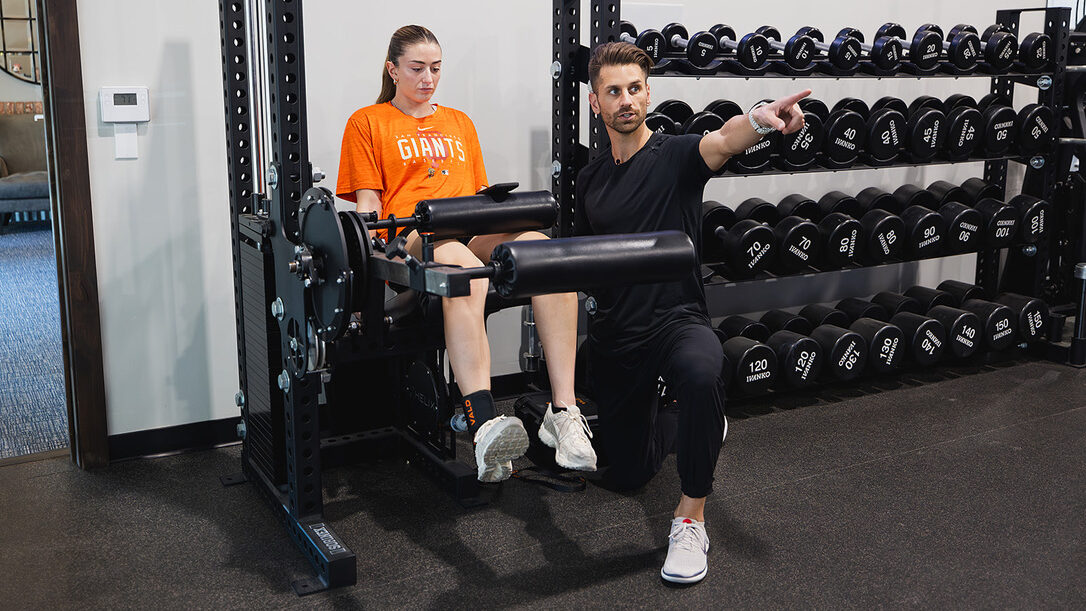
THE 3P MODEL IN CONTEXT
To understand why 3P works, it helps to look at how humans perform. Sports scientist Paul Glazier proposed that all athletic performance emerges from the intersection of three categories of constraints:
- Organismic constraints (the individual—anatomy, physiology, psychology)
- Environmental constraints (the context—weather, surfaces, travel, stress)
- Task constraints (the goal—rules, position, desired outcome)
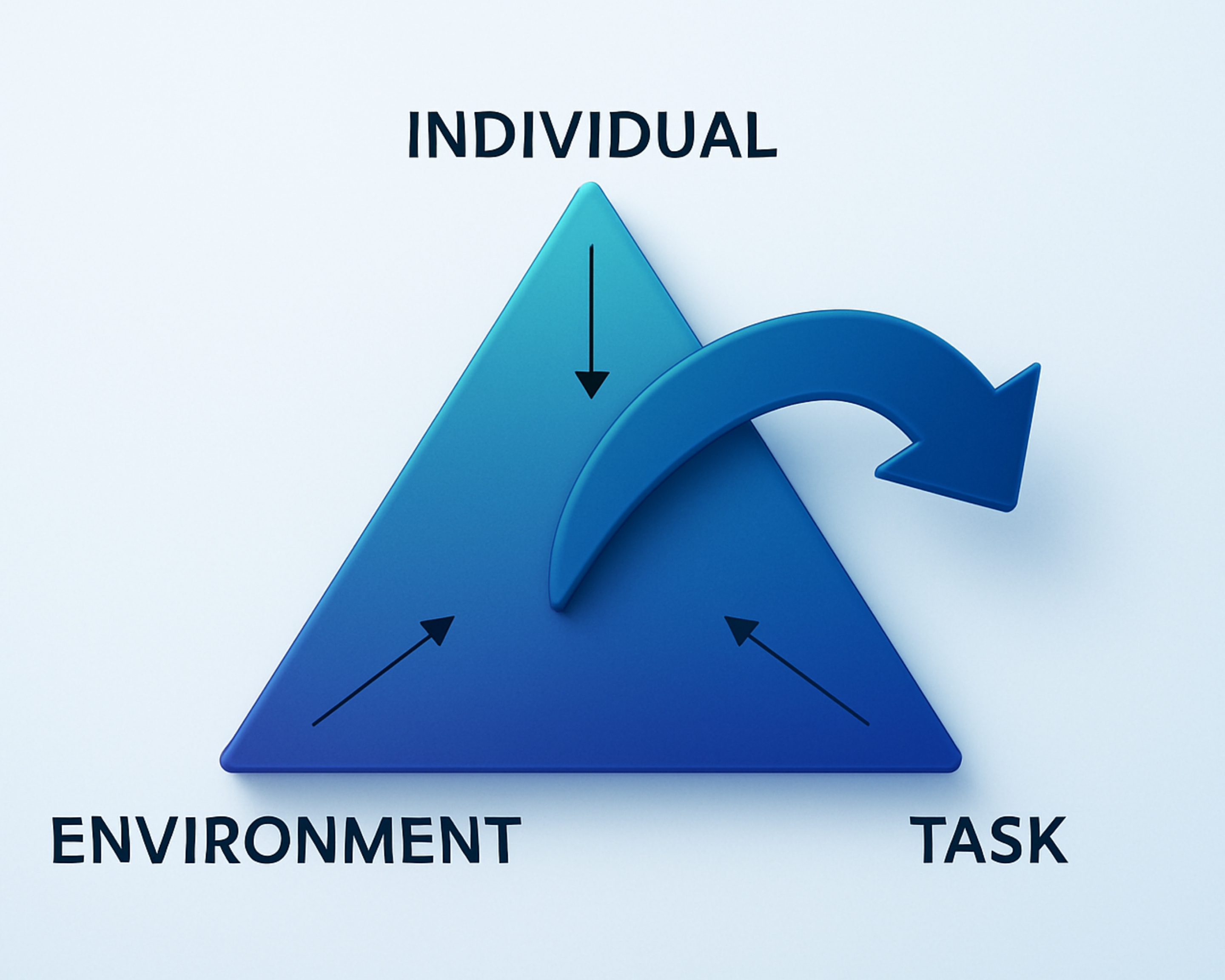
The athlete’s movement, behavior, and performance self-organize from these forces.
The 3P Model mirrors this concept.
- Principles = the constraints you believe in.
- Process = how you test and adapt those beliefs.
- Plans = how you operationalize them under real-world conditions.
It’s a translation tool between theory and practice—a unified system that keeps your interventions consistent with how humans actually behave.
Read About Others’ Transformations
“The Performance Therapy Mentorship was transformative. The combination of weekly modules, practical resources, and engaging lessons made complex topics easy to understand and apply. It’s a must for anyone looking to advance their career in sports rehab!”
Alex R. Athletic Trainer

“This mentorship program simplified complex concepts in a way that made them immediately applicable. The lessons on energy systems and periodization gave me a new perspective on how to structure training and manage workload effectively. It’s been a game-changer for my practice.”
Mike H. Physical Therapist

THE PRINCIPLES – THE RULES OF THE SYSTEM
A Principle is a fundamental truth that guides your choices. These are not techniques or tactics—they are the foundation that everything else rests on.
In the 3P Model, the 10 Principles are organized into three tiers of control, reflecting how 3P operates as a system:
I. BIOLOGICAL PRINCIPLES
How the body organizes itself to move and adapt.
1. Coordinate Movement
Movement is the foundation of athleticism. It must be managed across planes, speeds, and intensities.
- Movement is a skill, not just a pattern.
- Stress and load should vary by direction, rate, and duration.
- Teach athletes to feel movement, not just perform it.
Mentorship cue: Watch how your athletes distribute load and pressure through their body. Are they organizing efficiently, or compensating intelligently?
2. Manage Force (F = MA)
Force drives performance, but mismanaged force drives injury. Force is the currency of sport—strength is simply how well you can spend it.
- Deceleration creates more stress than acceleration—train both.
- Study an athlete’s “force signature”: do they rely on concentric, eccentric, or elastic strategies?
- The goal is not more force, but smarter force.
3. Build Fitness
Fitness is the capacity to fulfill a role. It’s not limited to heart rate or physical conditioning—it includes technical, tactical, and cognitive endurance.
- A fit system clears waste efficiently and produces energy economically.
- General capacities (VO₂max, tissue tolerance) support specific ones (sprinting, shooting).
- Build from the general → specific → integrated.
The best “fit” basketball player isn’t the one who runs the fastest—it’s the one who maintains consistent decision-making in the fourth quarter.
II. BEHAVIORAL PRINCIPLES
How the practitioner and athlete make decisions inside the system.
4. Commit and Learn
Analysis without action is paralysis.
- Make informed decisions, test them, then evaluate outcomes.
- Every rep, every intervention is a hypothesis—commit, observe, refine.
- The key to mastery is speed of feedback, not absence of error.
Mentorship cue: You can’t steer a parked car. Move first, correct second.
5. Context Matters
Every decision sits inside a unique set of constraints—team dynamics, environment, psychology.
- Health requires variability; performance requires constraint.
- Balance efficiency (doing it fast) with proficiency (doing it well).
- The same exercise can be medicine or poison depending on context.
Example: A split squat is mobility work for one athlete and load management for another.
6. n = 1
Every athlete is a sample size of one.
- Avoid absolutes—what works often is not what works always.
- Adapt interventions to the individual’s biology and behavior.
- Long-term success depends on personalization, not prescription.
Mentorship cue: Are you treating a protocol or a person?
III. STRATEGIC PRINCIPLES
How to prioritize, simplify, and sustain decisions over time.
7. Prioritize and Simplify
Complexity doesn’t make you advanced—clarity does.
- Focus on the 20% of work that drives 80% of results.
- Details matter, but obsession distracts.
- Be precise enough to measure, but simple enough to repeat.
8. Invest in Preparation, Not Prediction
You cannot predict injury, but you can prepare for chaos.
- Train modifiable risk factors: strength, lean mass, aerobic capacity.
- Consistency in preparation allows adaptability in performance.
- As Bill Parcells said, “Discipline creates freedom.”
Mentorship cue: Preparation is your insurance policy against uncertainty.
9. Treat the Person, Not the Diagnosis
Athletes are more than anatomy. An injury is a constraint, not a limitation—it narrows options but doesn’t eliminate them.
- Train the entire system, not just the injured segment.
- Contralateral loading and systemic conditioning accelerate recovery.
- Emotional connection enhances adherence and outcomes.
10. Consistency is King
The ultimate differentiator is consistency. This is how habits are formed. Athletes remember consistency more than complexity.
- Big wins come from compounded small wins.
- Stability under chaos is the mark of professionalism.
- The job is not to be heroic—it’s to be reliable.

Closing the Principles Section
These ten principles create the operating code of Performance Therapy.
They help you interpret behavior, design better experiments, and deliver decisions that make sense in real-world chaos.
When you know your principles, your methods become flexible—but your reasoning stays firm. As we move into the next section—Process—we’ll translate these principles into the daily experiments that drive performance.
THE PROCESS – TURNING PRINCIPLES INTO PRACTICE
A Process is how you bring your Principles to life. It’s the sequence of actions that transforms good intentions into measurable outcomes.
In Performance Therapy, your process must be dynamic, not dogmatic. You’re never executing a script—you’re running controlled experiments in a living system.
The goal isn’t to find the “right” intervention. The goal is to discover what works right now for this person in this context.
THE TWO ENGINES OF PROCESS: EXPERIMENTATION AND EXPOSURE
1. Experimentation: The Art of Safe-to-Fail
Every intervention you choose—manual technique, exercise, or recovery tool—is an experiment. Not all experiments succeed, but every experiment teaches. The question is not “Did it work?” but “What did it tell me?”
This mindset mirrors what Glazier described in constraint theory: performance emerges through the interaction of multiple variables, not the dominance of one. You don’t control those interactions—you guide them.
When you apply a new intervention, you are perturbing the system—creating a small disturbance to see how the body self-organizes in response.
If the system adapts favorably, amplify it.
If it destabilizes, dampen it.
If it does nothing, adjust and re-test.
That’s the real scientific method of the performance therapist.
Framework for Applied Experimentation
Step 1 – Define the Problem
Identify what’s not happening as expected—pain, movement limitation, poor force expression, etc.
Step 2 – Form a Hypothesis
Select an intervention that could meaningfully alter the system (e.g., mobility drill, loading strategy, cue).
Step 3 – Test and Re-Test
Observe the response. Use objective and subjective feedback.
Step 4 – Interpret the Change
Decide whether the adaptation was desirable or undesirable.
Step 5 – Adjust and Iterate
Use the new information to refine your next step.
Each iteration sharpens your decision-making. The athlete becomes both the subject and the feedback mechanism.
Practical Example: The Micro-Experiment
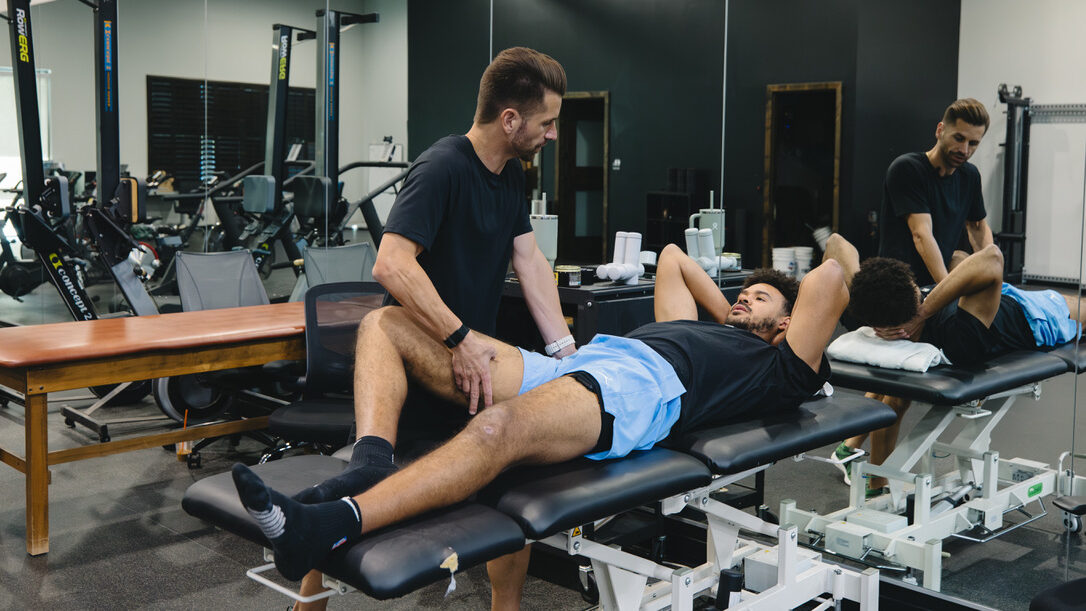
An athlete reports tightness in the posterior chain. You perform a straight leg raise test (baseline). You apply a 60-second breathing and hip-shift drill (intervention). You re-test.
If range improves and symptoms ease—amplify.
If nothing changes—dampen.
If it worsens—discard and redirect.
Simple, structured, repeatable. That’s performance science in action.
Mentorship note: This micro-experiment process should live inside every session. It keeps your reasoning accountable and your athlete engaged in the feedback loop.
2. Exposure: The Science of Adaptation
Experimentation reveals how the body reacts. Exposure determines how it adapts.
In nature and sport, organisms don’t grow stronger by avoiding stress—they grow by surviving it. The same applies to your athletes.
Exposure is the deliberate, progressive application of stress that builds capacity.
Glazier’s language—self-organization under constraint—captures this perfectly. You cannot program adaptation; you can only shape the environment so the body learns to adapt on its own.
Principles of Effective Exposure
Gradual Load Progression
Adaptation thrives on consistency and dose. “Slow when you can, fast when you must.” Build tolerance before you chase performance.
Task Specificity
Expose the athlete to the stressors of their sport, but only after the foundational systems are ready. A controlled environment precedes a chaotic one.
Stress Variability
Rotate the types of load—mechanical, metabolic, cognitive, emotional. Each one strengthens a different layer of resilience.
Feedback Integration
Exposure without reflection is just fatigue. Measure what the stress produced—range, power, readiness, confidence—and feed that data back into your plan.
Analogy: Exposure as a Currency Exchange
Think of adaptation like a global economy. Each new stressor is a currency. The body’s job is to convert that currency into a more stable form—strength, coordination, or capacity.
Expose too little, and the body stays poor.
Expose too much, and it goes bankrupt.
Expose wisely, and the system becomes wealthy—more robust, adaptable, and antifragile.
HOW EXPERIMENTATION AND EXPOSURE WORK TOGETHER
- Experimentation reveals what the system responds to.
- Exposure builds the capacity to sustain that response over time.
Together, they form the feedback engine that keeps the 3P Model alive.
Every intervention you make should move through these checkpoints:
| Step | Question | Example |
|---|---|---|
| Experiment | Did this intervention change the system? | A manual drill improved hip IR by 10° |
| Exposure | Can this change hold under stress? | Add load or speed to confirm durability |
| Evaluation | Did the athlete integrate it into performance? | Observe in sprint, cut, or jump tasks |
THE ROLE OF TEST & RE-TEST
Testing is not about pass or fail—it’s about pattern recognition. Use 1–3 repeatable metrics to guide every session. They should be:
- Relevant (connected to the athlete’s goal)
- Measurable (objective or perceptible)
- Repeatable (consistent over time)
For example:
- Range-of-motion test (relative movement)
- Force plate output (power expression)
- Subjective readiness (psychological state)
When you test and re-test regularly, you replace opinion with observation. You also teach athletes to see the link between what they feel and what they can measure—turning rehab into performance education.
Mentorship cue: Your process is the difference between being a technician and a strategist. A technician applies interventions. A strategist designs experiments. The more fluent you become in Experimentation and Exposure, the more predictable your outcomes become—without ever pretending that humans are predictable.
Transition to Plans
Principles define what you believe.
Process defines how you think.
Now it’s time to define how you organize that thinking into structured, adaptable plans.
In the next section, we’ll explore The Plans—where all three Ps converge into a system of action, feedback, and evolution.
What Others Are Saying
“What stood out was how well-rounded the mentorship was. From understanding biological healing timelines to learning tactical periodization, every topic built upon the last, giving me a complete framework to work with my athletes.”
Colin T. Physical Therapist

“This mentorship completely changed the way I think about rehab and performance. The content was tailored, practical, and deeply insightful. Adam’s guidance on advanced movement strategies gave me tools I use daily to help athletes perform better.”
Finn D. Performance Coach

THE PLANS – TURNING PROCESS INTO PERFORMANCE
A Plan is not a protocol—it’s a proposal. It’s a structured, adaptable roadmap that evolves as new information emerges from your process.
In the 3P Model, a plan isn’t something you write and follow blindly. It’s a living system that coordinates principles and processes into measurable, repeatable outcomes.
Where Principles provide direction and Process provides method, Plans provide coherence.
THE FUNCTION OF A PLAN
A plan answers three questions:
- Who are you working with?
- What do they need to do?
- Where and when will that performance occur?
Everything else—testing, loading, recovery, communication—flows from those answers.
Plans must adapt to the athlete’s constraints, just like Glazier’s framework reminds us:
- Organismic constraints (anatomy, physiology, psychology)
- Task constraints (sport demands, role, skill requirements)
- Environmental constraints (context, schedule, facilities, travel, stressors)
When these shift, your plan shifts. This is what separates a professional system from a static one.
THE THREE DIMENSIONS OF PLANNING
1. INDIVIDUAL CONSTRAINTS – Know the WHO
Every athlete brings their own biology, injury history, and psychology into the room.
- Structural constraints: previous surgeries, asymmetries, range limitations.
- Functional constraints: fatigue, recovery rate, motivation, sleep, nutrition.
- Behavioral constraints: learning style, communication preferences, buy-in.
Plans must adapt to these realities, not ignore them. When you plan, you’re not programming for a joint—you’re programming for a human ecosystem.
2. TASK CONSTRAINTS – Know the WHAT
What must this athlete be able to do?
The specific movement patterns, energy systems, and force expressions of their sport dictate your plan’s design.
For example:
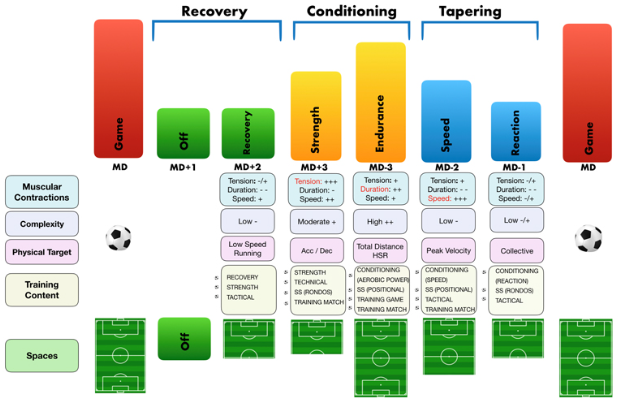
- A soccer midfielder spends 65% of match time walking, 25% jogging, and 10% sprinting.
- A basketball guard performs more high-velocity decelerations than accelerations.
- A baseball pitcher performs 90% of his workload unilaterally.
Task dictates training. The closer your plan mirrors the sport’s movement and energy signatures, the better the transfer of adaptation. Specificity isn’t just movement—it’s context, timing, and fatigue profile.
3. ENVIRONMENTAL CONSTRAINTS – Know the WHERE and WHEN
Where will your athlete perform—and under what pressures?
Environmental factors like travel, altitude, facility access, coaching culture, and life stress can make or break your best-laid plan.
- Environmental load: Travel fatigue, jet lag, weather conditions, playing surfaces.
- Social environment: Coaching communication, team politics, locker room culture.
- Temporal environment: Time of season, off-season structure, contract year anxiety.
Each one can either constrain or enhance your interventions. A perfect microcycle on paper fails if it doesn’t survive the chaos of the environment. Build plans that can bend without breaking. Resilience is programmed flexibility.
AMPLIFY DESIRABLES, DAMPEN UNDESIRABLES
Every intervention has a cost and a benefit. The therapist’s job is not just to create change—but to direct change.
A desirable adaptation might be improved range of motion, greater isometric strength, or faster sprint velocity. An undesirable one might be excessive stiffness, fatigue, or altered coordination.
You don’t eliminate undesirable adaptations—you manage them.
Think of it like tuning a soundboard: amplify the frequencies that serve performance, dampen the ones that distort it.
Micro-Level Application: Session to Session
Each session becomes a microcosm of the 3P system.
- Principles – What am I trying to reinforce? (e.g., movement variability, strength under fatigue)
- Process – What experiments or exposures will test that principle?
- Plan – How will I dose, measure, and adapt based on response?
This creates a continuous feedback loop of observation → adaptation → iteration.
APPLIED CASE STUDY – NBA PLAYER REHAB & RETURN
Let’s bring the 3P Model to life.
Athlete: 28-year-old NBA guard
History: Hip labrum surgery + chronic knee irritation
Context: Entering contract year, heavy travel schedule, high on-ball usage

Principles Applied
- Coordinate Movement: Restore frontal and transverse plane control post-surgery.
- Force Management: Rebuild deceleration strength for change of direction.
- Fitness: Maintain aerobic base to manage cumulative fatigue.
- Context Matters: Integrate work around team practices and minutes restrictions.
- Consistency is King: Track weekly loads and ensure predictable progression.
Process Applied
Experimentation:
- Week 1 test: 90/90 hip IR → post manual and respiratory drill → re-test → +12° improvement.
- Intervention amplified.
Exposure:
- Gradual introduction of split-squat patterns → lateral shuffle drills → controlled deceleration hops.
- Load tolerance progressed weekly using RPE monitoring.
Test & Re-Test:
- Hip IR, groin strength via dynamometer, counter-movement jump asymmetry.
- Used 3 metrics to assess weekly adaptation.
Plan Applied
Phase 1 (Weeks 1–3):
- Emphasis: Mobility + low-load coordination.
- KPI: Pain-free ROM, restore confidence in movement variability.
Phase 2 (Weeks 4–6):
- Emphasis: Force tolerance + isometric strength.
- KPI: Isometric mid-thigh pull ≥ 85% contralateral.
Phase 3 (Weeks 7–10):
- Emphasis: High-velocity exposure + plyometric readiness.
- KPI: CMJ asymmetry < 10%, controlled deceleration landings pain-free.
Phase 4 (Weeks 10–12):
- Emphasis: Integrated on-court return + load management.
- KPI: 1:1 practice-to-game volume ratio sustained for 2 weeks.

Result:
Athlete achieved full return to play without setbacks, improved movement quality, and maintained key force metrics. Perhaps most importantly—he gained confidence in his plan because it was transparent, adaptable, and measurable.
THE FEEDBACK LOOP – HOW 3P STAYS ALIVE
The 3P Model is circular, not linear.
- Principles guide your decisions.
- Process tests those decisions.
- Plans organize and execute those tests.
- Feedback from the plan refines your principles.
When your plans evolve based on feedback, your model evolves with them.
This is how your system matures from conceptual framework to clinical philosophy.
MENTORSHIP REFLECTION – THE 3P MINDSET
When you finish this mentorship, you should not be memorizing protocols—you should be thinking in systems.
Ask yourself:
- What principle am I acting on right now?
- How will I know if my process worked?
- How can I adapt my plan when the environment shifts?
The 3P Model gives you a compass, not a map. It points you toward consistency, clarity, and confidence in uncertain situations.
Because the truth is—performance therapy isn’t about fixing athletes. It’s about helping them adapt better to the world they already live in.
Research to read this week – 45 minutes
Video lesson: 3P Model
Journal assignment – 30 minutes
The 3P Model is my interpretation of Performance Therapy and how I organize my decisions within practice. I encourage you to spend 30 minutes asking yourself these five questions:
- What are 3-5 Principles that I believe in?
- What is my Process as to how I make decisions. Is it repeatable and consistent?
- What intervention variables are meaningful to me?
- What are my current constraints as a Performance Therapist?
- What are my gaps in my thinking or current practice as a Performance Therapist?
Fab Five
- The 3P Model: The framework of Principles, Process, and Plans helps ensure consistency in decision-making within Performance Therapy, guiding practitioners to be systematic and reliable in achieving positive outcomes.
- Principles of Performance Therapy: Ten principles, including “Coordinate Movement,” “Force Management,” and “Treat the Person, Not the Diagnosis,” offer foundational guidelines for therapy and training.
- Process: Focuses on experimentation and exposure, emphasizing safe-to-fail experiments and a gradual approach to stimuli to induce positive, sustainable adaptations.
- Plans: A detailed, adaptable approach based on individual, task, and environmental constraints, aimed at addressing athletes’ current and future needs.
- Amplify Desirables, Dampen Undesirables: Therapists should enhance desired adaptations while minimizing negative outcomes, adjusting interventions to meet each athlete’s unique situation and goals.
SUPPLEMENTAL Resources
Cynefin – how to make decisions?
CYNEFIN FRAMEWORK is a sense-making model for decision making. The video does a great job explaining the (4) domains. Watch the video first then scroll to view contextual examples of how each domain relates to Performance Therapy.
SIMPLE: A 16 year old soccer female player fractures a distal ulna from falling on an outstretched hand (FOOSH injury). The injury is a fractured bone and the BEST PRACTICE is to immobilize the forearm in a cast for 6 weeks.
COMPLICATED: A 24 year old male basketball player has chronic lateral right hip pain and right medial knee pain when sprinting full court during transitions. The symptoms are unusual and consistently occur only during high velocity running (> 14.0 mph). The action plan is to record video and consult a sprint coach to gain EXPERT OPINION. There may not be a single “best” solution, but there will be “good” solutions based on your abilities and the opinions of the expert.
COMPLEX: A 33 year old, veteran female basketball player consistently has low back discomfort with concurrent neural symptoms into her buttocks at deeper squat depths. She wants to continue to lift but you are unsure what squat strategy is most appropriate. You select (3) variations – Smith machine back squat, free standing safety squat bar, and Zurcher squat on a 10 degree ramp to elevate heels. With moderate load, you SAFELY EXPERIMENT to determine which exercise reduces pain and promotes strength training. The solution EMERGES when she reports the Zurcher with heels elevated eliminated symptoms. You now program her lower body strength training with this exercise variation and monitor load + symptoms to safely progress volume or intensity.
NOTE: most of what we do as Performance Therapists exists in the domain of Complex. This domain is why the 3P Model emphasizes Experiment & Exposure during the Process.
CHAOS: (most emergency or acute injury situations). A 25 year old basketball player is lifting in the weight room performing RDL exercises. During one rep the athlete instantly complains of low back pain and complains of back spasm. You ACT by stopping the training session and helping them achieve a comfortable position in supine hook lying. Then you SENSE by running through a subjective assessment and simple clinical tests. You RESPOND by providing direction specific manual therapy to help alleviate muscle spasm and reduce pain.
SIMPLE-CHOAS BOUNDARY: Most often occurs in situations when your ego gets the better of you, your emotional biases put the blinders on, or you assume a 2nd opinion is unwarranted. “Falling of the cliff” and crossing the Boundary often presents as a misdiagnosis and/or a poor outcomes based on interventions selected. Below is an example:
- A 26 year old female basketball player is complaining of inferior pole patella discomfort. No acute onset, pain reduces as she warms up, quadriceps strength on isokinetic testing shows 8% deficit, and clinical palpation indicates proximal patella tendon soreness. Clinical presentation suggests patella tendinopathy and your reasonable assumption based on past experiences of similar situations is to diagnose with tendinopathy. Symptoms continue to persist for 5 more days despite unloading and you refer out to orthopedic specialist to undergo imaging. Imaging shows minimal tendinopathy BUT transverse stress fracture across inferior pole of patella
- The ‘falling off the cliff’ was avoided because of referring out to a local specialist to further investigate. If you chose to continue with tendon loading, then stress would have continued to persist at the site of the stress fracture and most likely not improve.
BOOK: Cynefin Mini Book – a short book to help dive deeper into the decision making process of the Cynefin Framework.
BOOK: Black Box Thinking – a popular novel that explores how individuals and organizations can achieve success by learning from their mistakes. Drawing on real-world examples, Syed argues that embracing failure, analyzing errors like in aviation’s “black box,” and fostering a culture of improvement lead to innovation and growth.
BOOK: Great By Choice – this book examines how companies thrive despite uncertainty and chaos. The authors identify behaviors and strategies that allow businesses to succeed in unpredictable environments, focusing on innovation, discipline, and preparing for turbulent times.
ARTICLE: Know Your Domain – a brief article from Medium.com that has some nice charts and infographics to better help you understand nuances of each Cynefin domain.
RESEARCH: The article below on graded exposure therapy emphasizes its utility for patients with low back pain (LBP), particularly those with fear-avoidance behaviors. Graded exposure helps reduce pain-related fear by gradually exposing patients to activities they fear, starting with lower levels of intensity and progressively increasing over time. This intervention is grounded in the Fear-Avoidance Model, encouraging patients to confront, rather than avoid, activities. This approach helps athletes build confidence in movement, improving their overall function and reducing the risk of chronic pain through systematic, graded activity increases
Did You Enjoy This Lesson? Then Join the Industry Leading Performance therapy Mentorship!
Still Not Sure If The Mentorship Is Right For you?
“Eye-opening in how detailed and practical the mentorship was. The insights and strategies I gained have completely transformed how I work with athletes. If you’re on the fence, take the leap – you won’t regret it.“
Jamil D. Physical Therapist

“Adam’s mentorship opened my eyes to the finer details of rehab and performance. Learning high-velocity rehab exercises and understanding how to progress athletes safely through the continuum has been invaluable. I now feel more confident than ever managing athletes at all stages.”
Steven U.Athletic Trainer
