Let’s recap the 3P Injury Prevention Toolkit so far:
- Tool #1: Movement – foundation for health & performance
- Tool #2: Strength – building resilience to protect your body
- Tool #3: Fitness – improving capacity and longevity
In this article we will explore the fourth tool in the 3P Injury Prevention Toolkit: Exposure. At its core, exposure is about progressively increasing stressors—whether physical, mental, or systemic—in a controlled and thoughtful way. In training, this approach is essential to build resilience, prevent injuries, and optimize performance. However, the principle of graded exposure isn’t exclusive to injury prevention. It’s a universal concept that exists in psychology, dietetics, and even finance.
Let’s explore how graded exposure works, why it’s vital for injury prevention, and how you can apply it to training, recovery, and beyond.
What is Graded Exposure?
Graded exposure refers to the deliberate, step-by-step increase in stressors to build capacity over time. In exercise, this might mean gradually increasing training volume or intensity to improve fitness without risking injury. But this concept extends far beyond physical exercise:
- Psychology: Exposure therapy gradually introduces individuals to feared stimuli in controlled environments, helping them build mental resilience and reduce anxiety.
- Dietetics: Weight management often involves small, sustainable changes in calorie intake to avoid metabolic shock and promote long-term success.
- Finance: Compounding interest demonstrates the power of consistent, incremental growth to build wealth over time.
In all these fields, the principle is the same: consistent, controlled exposure leads to sustainable improvement.
The Acute:Chronic Workload Ratio: A Lesson from Pro Sports
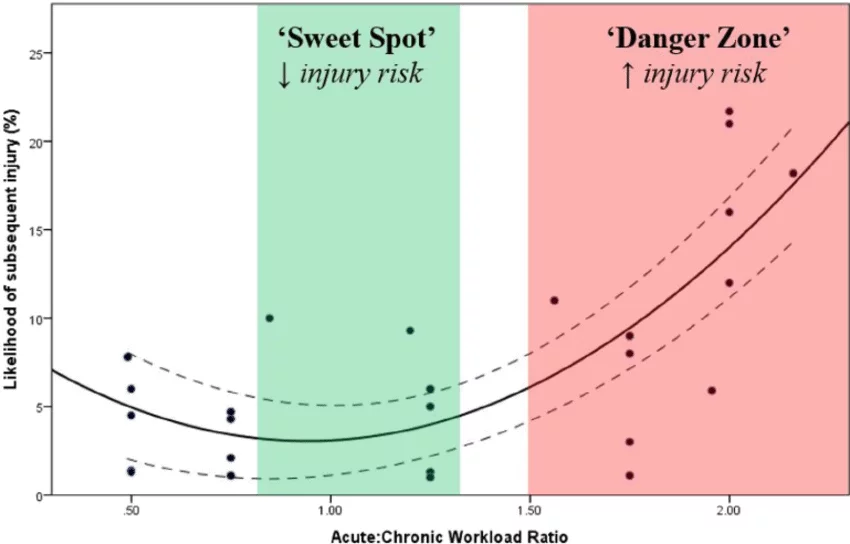
The Acute:Chronic Workload Ratio (ACWR) is a simple yet powerful metric for understanding how an athlete’s recent training load compares to their longer-term fitness capacity. It’s calculated by dividing the acute workload (the past week’s average training load) by the chronic workload (the rolling 4-week average). This ratio provides insight into whether an athlete’s training is progressing at a sustainable pace or if there’s a risk of undertraining or overtraining.
- Example Calculation:
If an athlete’s training load for the past week (acute) is 500 units and their 4-week rolling average (chronic) is 600 units, the ACWR would be 500 ÷ 600 = 0.83.
The ACWR Ideal Range
- 0.8–1.3 (The Sweet Spot): This range is associated with optimal performance and a lower risk of injury.
- <0.8 (Too Low): Indicates undertraining, which can lead to detraining and reduced capacity to handle stress.
- >1.5 (Too High): Reflects a sudden spike in workload, increasing the risk of soft-tissue injuries and overuse conditions.
How the ACWR Can Impact Everyday Training
The principles behind the ACWR apply not only to athletes but also to anyone engaging in fitness or physical activity. Gradual progression is key: whether you’re building a running routine, starting a strength program, or increasing the duration of your workouts. Sudden spikes in intensity or volume can lead to undesirable fatigue, soreness, or injury.
For example, if you typically jog 3 miles a week and suddenly increase to 10 miles, your risk of overuse injuries skyrockets—just as it would for an athlete exceeding their workload capacity. Instead, following the ACWR principle, aim to gradually increase your weekly mileage by no more than 10% to allow your body to adapt safely.
By monitoring your progress and pacing your workload appropriately, you can build fitness, reduce the risk of setbacks, and make sustainable gains in your training journey. Whether you’re a weekend warrior or a seasoned athlete, the ACWR highlights the importance of balance in achieving long-term success.
Chronic Workloads: Building a Reserve for Resilience
Your body, much like a savings account, builds reserves that protect it from sudden spikes in demand. In sports science, this is known as chronic workload—the accumulated stress your body has adapted to over time. A high chronic workload creates a fitness reserve that acts as a protective buffer against injury, enabling athletes to handle acute spikes in activity with reduced risk.
Lessons from Pro Sport: Chronic Workload as Injury Insurance
Research highlights the value of chronic workloads in injury prevention:
- Example from Gaelic Football: Players with chronic training loads above 4750 AU (arbitrary units) were significantly less likely to sustain injuries when performing high-intensity tasks like maximal velocity running. This reserve capacity allowed them to safely tolerate the demands of their sport, reducing the risk of soft-tissue injuries caused by sudden increases in stress.
This principle is also crucial in injury rehabilitation, where the goal is to rebuild an athlete’s capacity gradually and systematically. For instance, returning athletes are often placed on “minute restrictions,” where their exposure to game intensity is carefully controlled. These restrictions ensure their workload increases align with their adapted capacity, minimizing reinjury risk while progressively restoring fitness.
Everyday Applications: Build your Reserves
The science behind chronic workloads doesn’t just apply to elite athletes—it’s equally relevant to everyday people striving for fitness or recovering from injury. Whether you’re a recreational runner, a weekend warrior, or someone looking to regain strength after time off, building your fitness reserve gradually is key to staying healthy and active.
- For Everyday Fitness Enthusiasts:
If you’re starting a new workout routine or increasing intensity, avoid the temptation to do too much too soon. For example, if you usually walk 3 miles a day and decide to add running, begin by jogging short intervals within your walk. Gradually increase the duration or intensity over several weeks, allowing your body to adapt. - For Those Recovering from Injury:
Similar to athletes on minute restrictions, break your return to activity into manageable steps. For example, after a sprained ankle, start with low-impact activities like swimming or cycling before progressing to weight-bearing exercises or running.
Practical Ways to Measure & Manage your Worklods
Graded exposure is only effective when it’s tracked and measured. Here are three simple ways to monitor workloads:
- Session RPE (Rate of Perceived Exertion):
Multiply the your perceived intensity (1–10 scale) by the session duration to calculate workload.- Example: A 7/10 effort for a 60-minute session equals 420 workload units (7 x 60 = 420)
- Wearables:
Oura rings, Apple Watches, and Fitbits are all examples of wearables that can track distance, speed, and intensity to gauge external workload. These tools help automate load management and efficiently monitor workloads. - Resistance Training Volume:
Calculate total training volume by multiplying sets, reps, and weight lifted.- Example: 3 sets of 10 reps at 50 pounds equals 1500 units.
Tracking our activity allows to efficiently measure our progress to help reduce overtraining and reduce the overall risk for potential injuries.


Periodization: Structure for Success
Periodization is the strategic planning of training to ensure gradual exposure while optimizing recovery and adaptation. Here are three common periodization models:
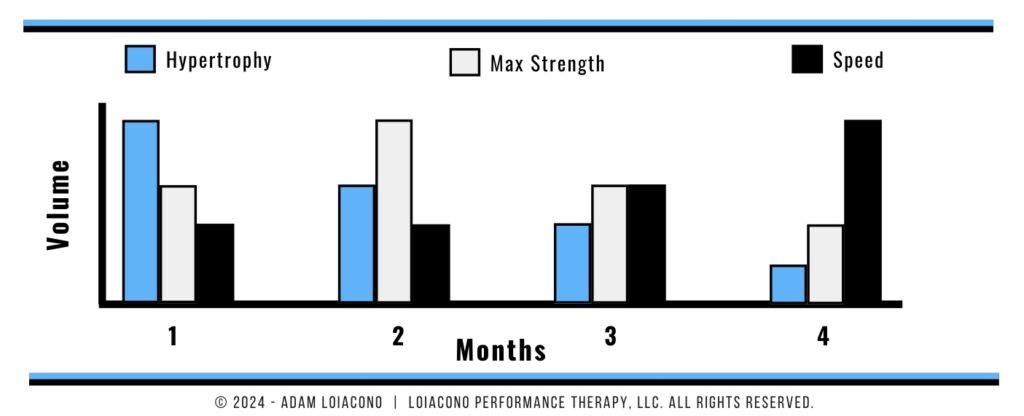
- Block Periodization:
Focus on one attribute (e.g., strength or endurance) in sequential phases.- Example: In ACL rehab, progress from endurance to strength and to eventually power training.
- Microdosing:
Use small, frequent doses of training to maintain fitness without overwhelming the athlete.- Example: Short, daily lower-body strength sessions for athletes returning from injury or busy individuals with limited time in their days.

- Undulating Periodization:
Vary intensity and volume within the same cycle to maintain adaptability.- Example: Alternate high-intensity sprints with lower-intensity recovery runs throughout the week.
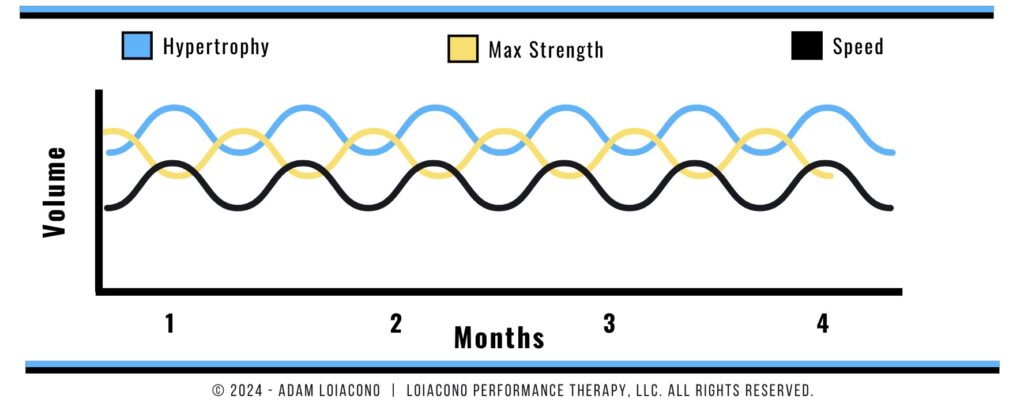
These methods assure we adequately provide the stress needed to make adaptions while also balancing the stress to reduce the risk of injury.
How to Reduce Injury Risk with Exposure
Gradual and thoughtful progression is the cornerstone of safe and effective training, whether you’re building fitness, preparing for competition, or recovering from an injury. By following these key strategies you can reduce injury risk, build resilience, and optimize long-term performance. Here’s how to implement these principles effectively.
- Follow the 10% Rule:
Increase training volume or intensity by no more than 10% per week to avoid sudden spikes. - Progress Thoughtfully:
Use the motto “slow when you can, fast when you must” to guide your pacing. Gradual progress reduces injury risk and builds resilience. - Prepare for Sport & Activity Specific Demands:
Introduce high-stress movements like maximal velocity running gradually during training to prepare athletes for game intensity. Or if specific to a competition or job, perform the activities that you will eventually be asked to perform. - Balance Workloads:
Maintain consistent chronic workloads, even during lighter training weeks, to avoid detraining. Avoid spikes in training loads to reduce to risk of injury from overtraining. - Choose a Periodization Scheme:
Whether it is Undulating, Block, or Microdosing – choosing an appropriate periodization scheme will help you balance your fitness or rehab plan.
Exposure as a Path of Least Resistance
Graded exposure is the cornerstone of injury prevention and performance. By progressively increasing stress in a controlled way, we can build capacity, minimize risk, and prepare for long-term success.
Next up in the 3P Injury Prevention Toolkit, we’ll explore Data. If you measure it, then you manage it.
Sincerely,
Dr. Adam Loiacono
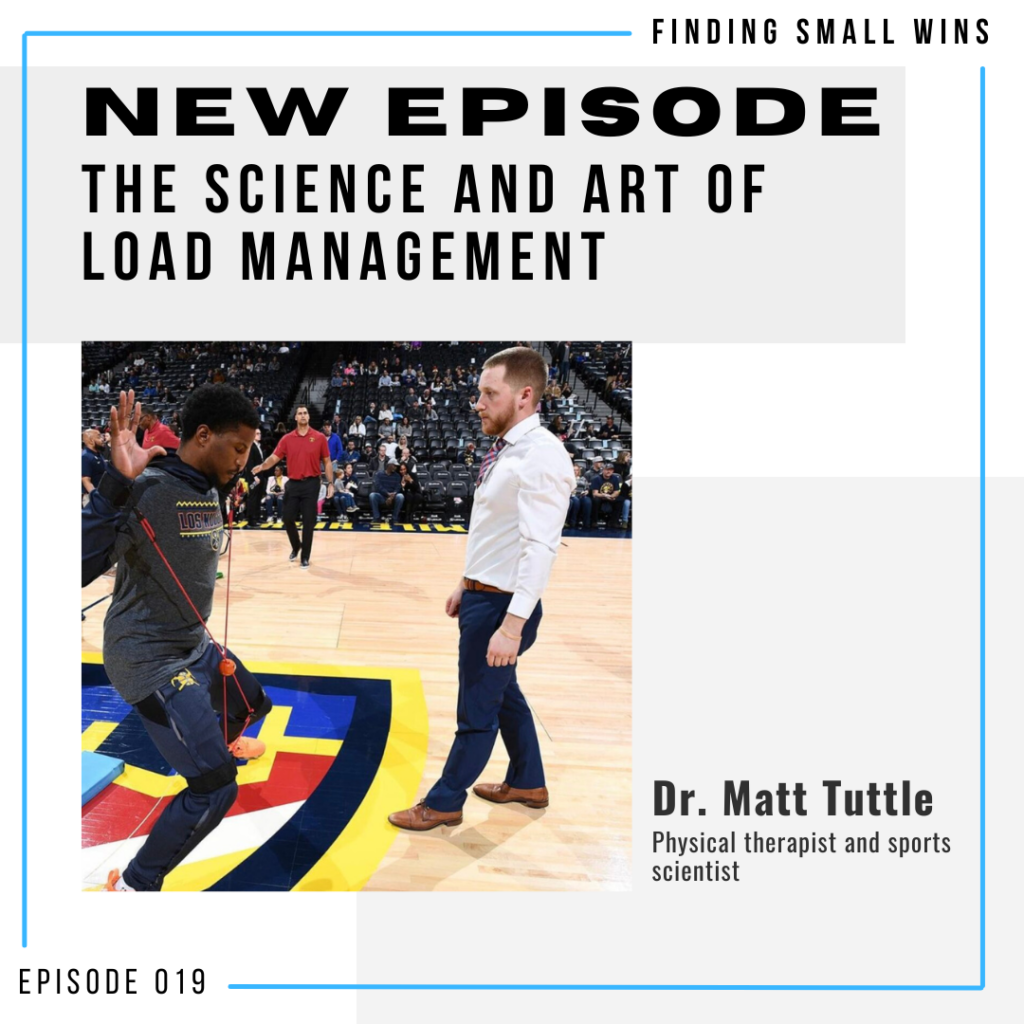
Finding Small Wins Podcast!
Mainstream media has often misunderstood what load management is and it’s impact on performance.
Tune into Episode 019 with expert Dr. Matt Tuttle to learn more!
- Gabbett TJ. The training-injury prevention paradox: Should athletes be training smarter and harder? Br J Sports Med. 2016;50(5):273-280. doi:10.1136/bjsports-2015-095788.
- Taberner M, Spencer N, Murphy B, Antflick J, Cohen DD. Progressing on-court rehabilitation after injury: The control-chaos continuum adapted to basketball. J Orthop Sports Phys Ther. 2023;53(9):498-509. doi:10.2519/jospt.2023.11981.
- Gabbett TJ, Oetter E. From tissue to system: What constitutes an appropriate response to loading? Sports Med. 2024. doi:10.1007/s40279-024-02126-w.
- Taberner M, Allen T, Cohen DD. Progressing rehabilitation after injury: Consider the ‘control-chaos continuum.’ Br J Sports Med. 2019;53(18):1187-1191. doi:10.1136/bjsports-2018-099452