Movement is the foundation of health and human performance. It’s where everything starts—whether you’re walking, running, lifting, or throwing. Proficient movement reduces fatigue, lowers injury risk, and unlocks human potential.
Real Life Stories About Movement
Longevity & Movement
A mentor once told me about his 94-year-old grandmother. Despite snowy winters in the Midwest, she lived independently, walked daily, and managed her household chores. Movement was a central part of her life. Unfortunately, she slipped on ice one morning and fractured her hip. The immobility that followed significantly diminished her health, reduced her movement, and she passed away six months later.
Athletic Performance & Movement
I’ve worked with an NBA player whose career longevity was questioned due to multiple injuries in college. Several teams passed on him during the NBA Draft because of the fear of career longevity. When we began working together, his movement quality was poor, creating compensatory patterns that put him at risk for further injury.
He went through the 360 Performance Profile to learn what his status was. After assessing his baseline:
- Strength: 75th percentile
- Fitness: 87th percentile
- Movement: 63rd percentile
It was clear: improving his movement needed to be the priority. By focusing on hip and knee mobility, we reduced his risk for non-contact injuries and improved his game availability. His improved availability provided him the opportunity to perform well that helped him secure a second contract with a significant payday.
Movement is the foundation for both longevity and performance. Like a house, without a solid foundation, any additional layers become unstable. Create a solid foundation of movement before layering strength or fitness.


The Impact of the Past, Present, and Future
Human behavior, and movement, does not just exist for a reason. There is almost always a reason why. When an injury happens, I channel my inner Sherlock Holmes and try to understand why that injury happened. In the absence of injury, I do the same to try to understand why someone moves, sits, or stands the way they do. Your posture and movement did not just appear out of thin air. It is determined by past experiences, present conditions, and future goals.
Past Experiences
“Everyone has a past, but that’s just it – it’s the past. You can learn from it, but you can’t change it.” – Nicholas Sparks, novelist, multiple New York Times bestsellers
Our movement and posture tell us a story, and that story starts with our past. Previous injuries or surgeries change our anatomy and physiology forever. A previous injury is the number predictive factor for a future injury. Injured tissues are never the same as normal tissue.
Previous sports, activities, jobs, or competitions dramatically influence our current movement capabilities. Our body learned how to adapt to those stressors to become efficient.
- Played baseball in high school? Chances are you have increased shoulder external rotation in your throwing shoulder
- Participated in dance as a child? You probably have high arches from the dance shoes and constant pointed toes.
- Sit at a desk looking at screens for your job? Your rounded shoulders and forward head posture was an adaptation to this position for hours on end.
I remind you, none of these are good or bad. They simply just are. Our body is smart, and it adapts. We want that. That’s how we survive our daily stress. The challenge becomes when these adaptions go unchecked and lead to potential injury.
Current Conditions
What is occurring right now in your environment is influencing how you move, sit, or stand. Consider the art of understanding body language. FBI interrogators learn how the subtlest shift in posture, gaze, or hand position communicate something non-verbally. Current thoughts, immediate stress, or our physical environment will influence what our posture and movement capabilities are.
- Feeling tired and fatigued today? You most likely will have limited range of motion and can’t touch your toes in comparison to days when you are more refreshed
- Temperature a little on the cold side? Your achy knee or back probably is a bit more stiff than if you were at the beach in Cabo.
- Slept funky last night and woke up with a twinge in your neck? You probably are turning your whole body to look to the right when seeing over your
Here is a small anecdote. I once was evaluating the hip mobility of a recurrent client. She came in one day and their straight leg raise, and hamstring flexibility were less than usual. I noted it and moved on. A few minutes later she asked to go use the restroom. She had been holding it in because she was running late and she did not stop in the bathroom before coming into my appointment. She returned feeling more relaxed. I rechecked her hip mobility and hamstring flexibility. Guess what? She was back at her baseline – and I did nothing to influence that movement or posture.
I am not suggesting relieving yourself in the bathroom is the solution to your low back pain or poor hip mobility. Rather, I am highlighting that our current conditions of stress, emotions, or symptoms can influence our movement and posture.
Future Goals
The best way to illustrate how future goals influence movement is to use a practical example. Imagine these two scenarios – squatting something extremely heavy to win a competition versus squatting to improve hip flexibility.
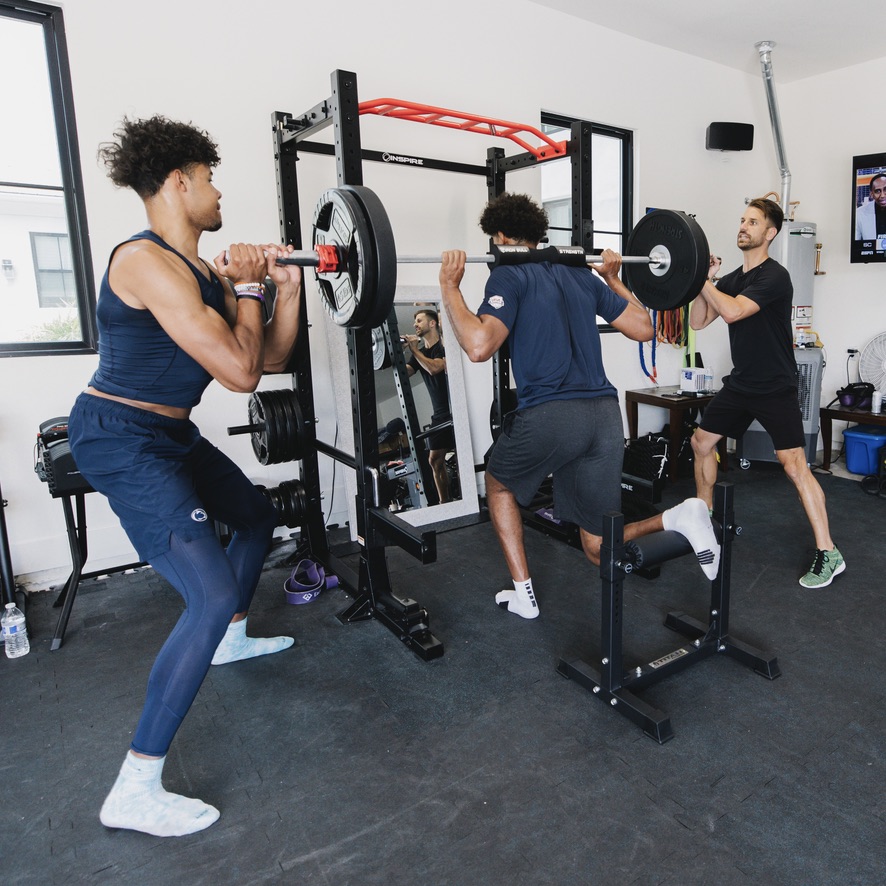
If the goal is to back squat as much as humanly possibly, the safest and most effective way to do this is by taking a wide stance, spinning my feet out, and locking out my spine (a sumo position). This position will provide the best chance to be successful at this lift, yet it will dramatically reduce our range of motion.
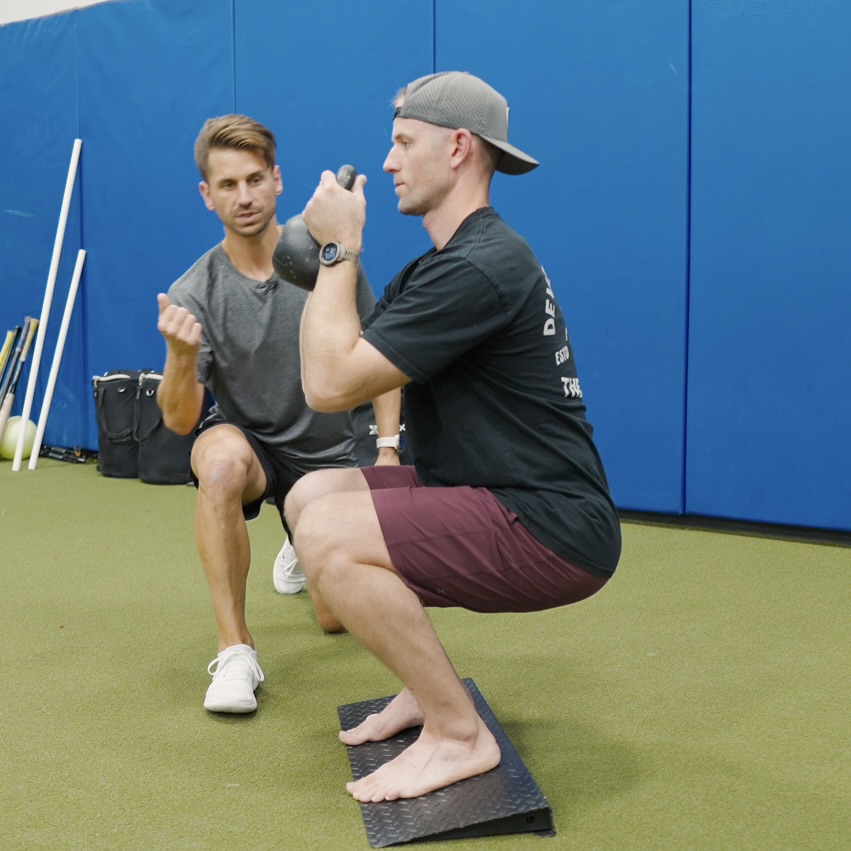
Vice versa, if the goal is to improve hip mobility then a more narrow stance with our feet under our hips and utilizing a front loaded kettlebell will help us improve our hip mobility (a goblet position).
The goal of lifting something extremely heavy versus something lighter influenced how we moved. Now, imagine you had a previous history of knee surgery or chronic low back pain. Chances are over time you have created a compensatory pattern to avoid reaggravating those symptoms. Layer that with you are feeling some ankle tightness today and now your movement pattern is altered even further. Past experiences, present conditions, and future goals dramatically influence our posture and movement.
Proficiency + Efficiency + Deficiency = Movement
Just as the past, present, and future shape movement, so too do proficiency, efficiency, and deficiency. Understanding these key differences can help us understand how and why we move.
- Proficiency: performing the movement with accuracy, consistency, and control
- Efficiency: executing the movement minimal energy and maximal output
- Deficiency: the inability to perform the movement due to the lack of strength, mobility, or pain
How and why move a particular way can be influenced by all of these or just one. The goal is to execute a movement with the highest degree of proficiency while being efficient to save energy all while having no deficiencies to prevent potential injuries. This rare scenario is often the secret recipe for athletes who have long careers.
The more common scenario is that proficiency is sacrificed at the expense of efficiency due to a deficiency. Consider the golfer teeing off or a baseball pitcher throwing a fastball. Biomechanists have spent countless hours learning the most proficient way to accomplish movements like these. Yet, not all pitchers throw the same way and not all golfers tee off the same way. Variables such as limited mobility, anthropometrics, or past injuries inhibit the ability to execute with the highest degree of proficiency.

In movement, no two individuals will execute a skill identically, as their unique blend of proficiency, efficiency, and deficiency creates distinct patterns. By identifying and addressing these variables, we can move closer to our full potential, reducing injury risk and enhancing performance longevity.
What Influences Movement
Movement is shaped by a variety of factors, each playing a role in how our bodies adapt, perform, and respond to the stresses of daily life and physical activity. From the way we hold ourselves in static postures to how our muscles, bones, and natural asymmetries function, these influences create the foundation for how we move. Understanding these key elements provides valuable insight into optimizing movement and addressing limitations to reduce the risk of injury and improve performance.
- Posture: Adaptations over time tell a story—like a baseball player’s increased shoulder mobility or a desk worker’s rounded shoulders. These changes reflect how the body responds to specific stresses by creating long-term adaptations. Adaptations are not good or bad, rather they simply just are. The body is smarter than we are. These adaptations exist based on repeated exposure and the body adapting to become more efficient.

- Hypertrophy: Muscle growth improves strength but must be balanced to avoid restricting range of motion or altering joint mechanics. Muscles produce tension. Larger muscles produce more tension than smaller muscles. If muscles surrounding a joint are drastically different in size, than there will be in imbalance of tension and ultimately a range of motion imbalance.
- Specificity Principle: The body adapts to the specific stresses it encounters, making variability in training essential. In the scientific world, this principle is formally known as SAID – Specific Adaptations to Imposed Demands. In the bro science world, this is more commonly known as “Use it or Lose it.”
- Wolff’s Law: Bones adapt to consistent mechanical forces. Properly managed stress strengthens bones, while imbalances can cause structural issues such as hip impingement or bone spurs in ankles.
- Asymmetry: We as humans are naturally asymmetrical. Look no further than major organs – your heart is on the left and your liver is on the right. These asymmetries influence movement through some variation of a twist or turn through our spine, ribcage and pelvis.


How to Improve Movement
Improving movement isn’t about doing one thing perfectly: it’s about consistently practicing and refining your approach. Below are detailed strategies and actionable tips to help you build a strong foundation for efficient, pain-free movement.
1. Learning
Movement, like any skill, requires dedicated practice to improve coordination and proficiency
- Frequent Practice:
Just as mastering a musical instrument takes regular sessions, movement coordination requires consistent effort. If your goal is to improve your squat pattern, include squat variations within your morning routine or during your warm-up before you exercise. - Deliberate Progression:
Start with simple movement patterns like walking, lunging, or hinging. Once those become second nature, increase the complexity by adding direction changes, increased intensity, or faster speeds. For instance, progress from a static lunge to a walking lunge, and eventually to multi-directional lunges with resistance. - Purposeful Variability:
Train movements in different contexts, speeds, and intensities to enhance adaptability. For example, if you’re working on improving your ability to jump, practice this movement through different methods (e.g., box jumps, jump rope, or hurdle hops) and at varying speeds to prepare for real-world scenarios.
2. Exercise Selection
Not all exercises are created equal, and individual needs should dictate your approach.
- Individualization Matters:
Your posture, goals, and unique adaptations should guide exercise choices. For example, if you have limited shoulder mobility, a traditional overhead press might not be suitable. Instead, opt for a landmine press or a floor press to achieve similar strength benefits while respecting your mobility limitations. - Avoid Cookie-Cutter Approaches:
Exercises like the squat or deadlift don’t need to look the same for everyone. A sumo deadlift might work better for someone with limited hip mobility, while a conventional deadlift could suit someone with a strong posterior chain. Choose exercises that align with your body’s capabilities.


3. Appropriate Equipment
The tools you use can make a big difference in improving movement.
- Rethinking Orthotics:
An orthotic isn’t just a foot insert—it’s any external tool that improves your movement. For example:- A resistance band can assist with hip activation during squats.
- A unilateral kettlebell can help you maintain balance during single leg work.
- During push-ups, using handles rather than flat hands on the floor can enhance rotator cuff activation for shoulder stability.
- Match Equipment to Needs:
If you struggle with ankle mobility during squats, try using small wedges under your heels. This modification can improve your range of motion and alignment, allowing you to focus on building strength without compensations.

4. Treat the Part, Train the System
Efficient movement requires addressing specific problem areas and integrating them into whole-body patterns.
- Soft Tissue Work:
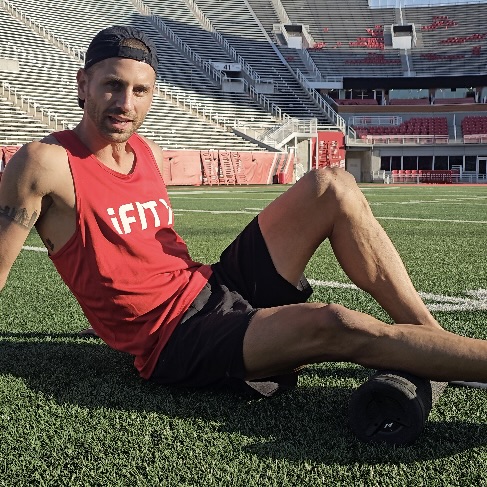
Tools like foam rollers, lacrosse balls, and massage guns can target soft tissues around problem areas. For example, if you have knee pain, focus on releasing tightness in the quadriceps and calf muscles. - Low-Intensity Strengthening:
Strengthen muscles surrounding symptomatic joints with isolated, controlled exercises. Machines, like a seated calf machine, can be effective for building foundational strength before progressing to compound movements. - Integrating the System:
Once the specific area is addressed, incorporate it into larger movement patterns:- Achilles Pain: Mobilize the calves, then practice seated calf exercises, and finish with low intensity jumping activities.
- Shoulder Discomfort: Release the lats and scapular muscles, then progress to pressing movements like a floor press or landmine press.
5. Breathwork
Breathing directly affects posture, mobility, and overall movement quality.
- Posture and Mobility:
Breathing patterns influence rib cage and pelvic alignment, which, in turn, affect how your shoulders and hips move. For example, shallow chest breathing can create a forward-tilted rib cage, limiting thoracic mobility and shoulder function. - 360 Breathing is better than Belly Breathing
Belly breathing alone is not efficient breathing. Instead, practice 360 circumferential breathing by lying on your back with one hand on your chest and the other on your belly. Breathe deeply into both your chest and belly equally ensuring 360 expansions throughout the chest, ribs, and belly. This simple exercise can help reset posture and improve core stability. - Breathing During Exercise:
Proper breathing during lifts or dynamic movements helps manage intra-abdominal pressure and ensures muscle tension is distributed appropriately. For example, exhaling during the concentric phase of a squat can help engage your core and protect your spine.

Take Action Today
Improving movement isn’t about perfection; it’s about finding small wins each day. Developing habits and taking intentional steps will lead to lasting improvements in performance and injury prevention. Start practicing these strategies today, and you’ll feel the difference in how your body moves and performs!
Check out the next Tool in the 3P Injury Prevention Toolkit – STRENGTH.
Sincerely,
Dr. Adam Loiacono

Finding Small Wins Podcast!
Curious on how to implement simple solutions to upgrade your movement?
Check out Episode 037 of the Finding Small Wins podcast to learn more!